 ENG
 INA
PSDIE Unud Public LectureWith Former Ambassador of the Republic of Indonesia: Strengthening Bali's Economic and Tourism Resilience Amid Global Geopolitical Volatility
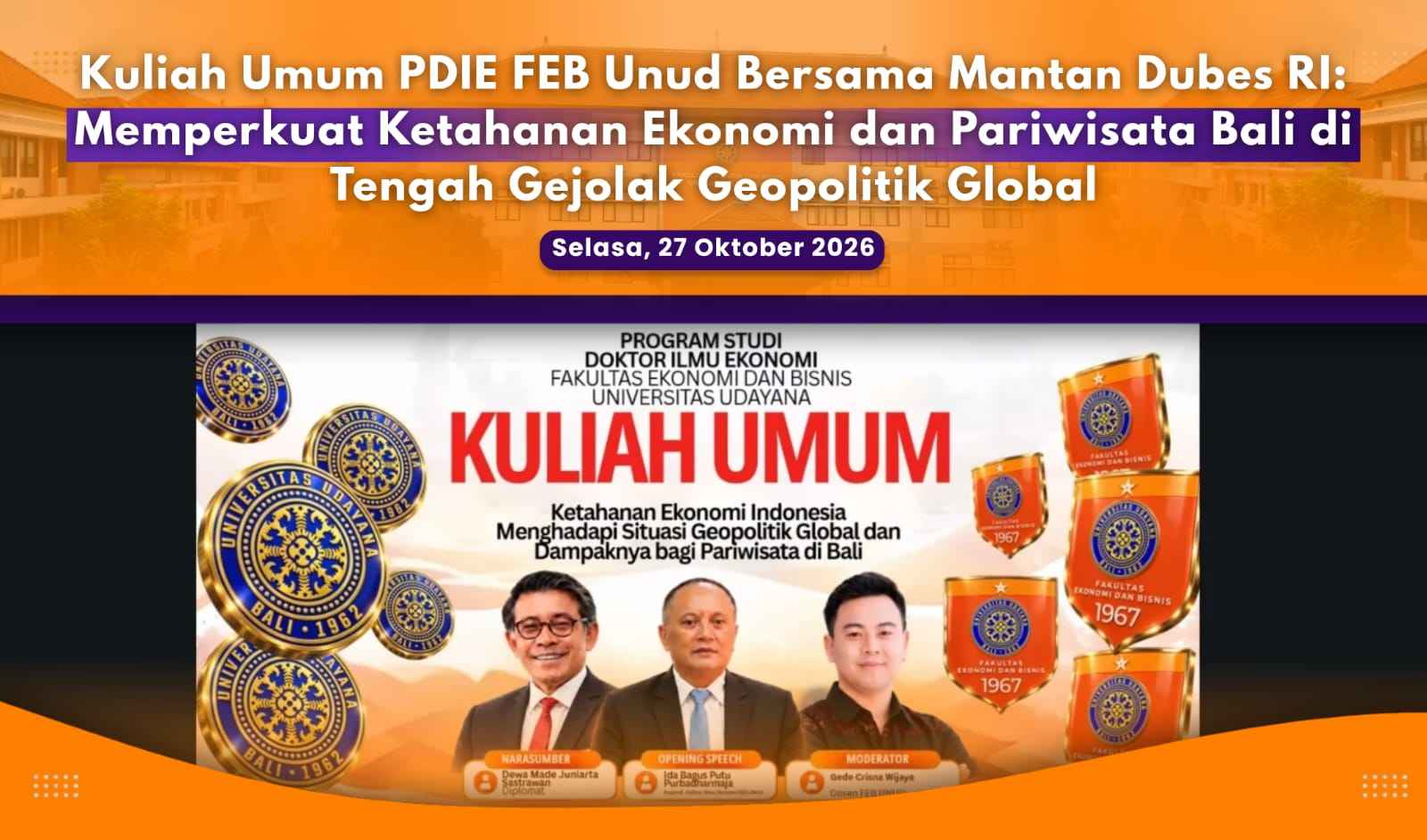
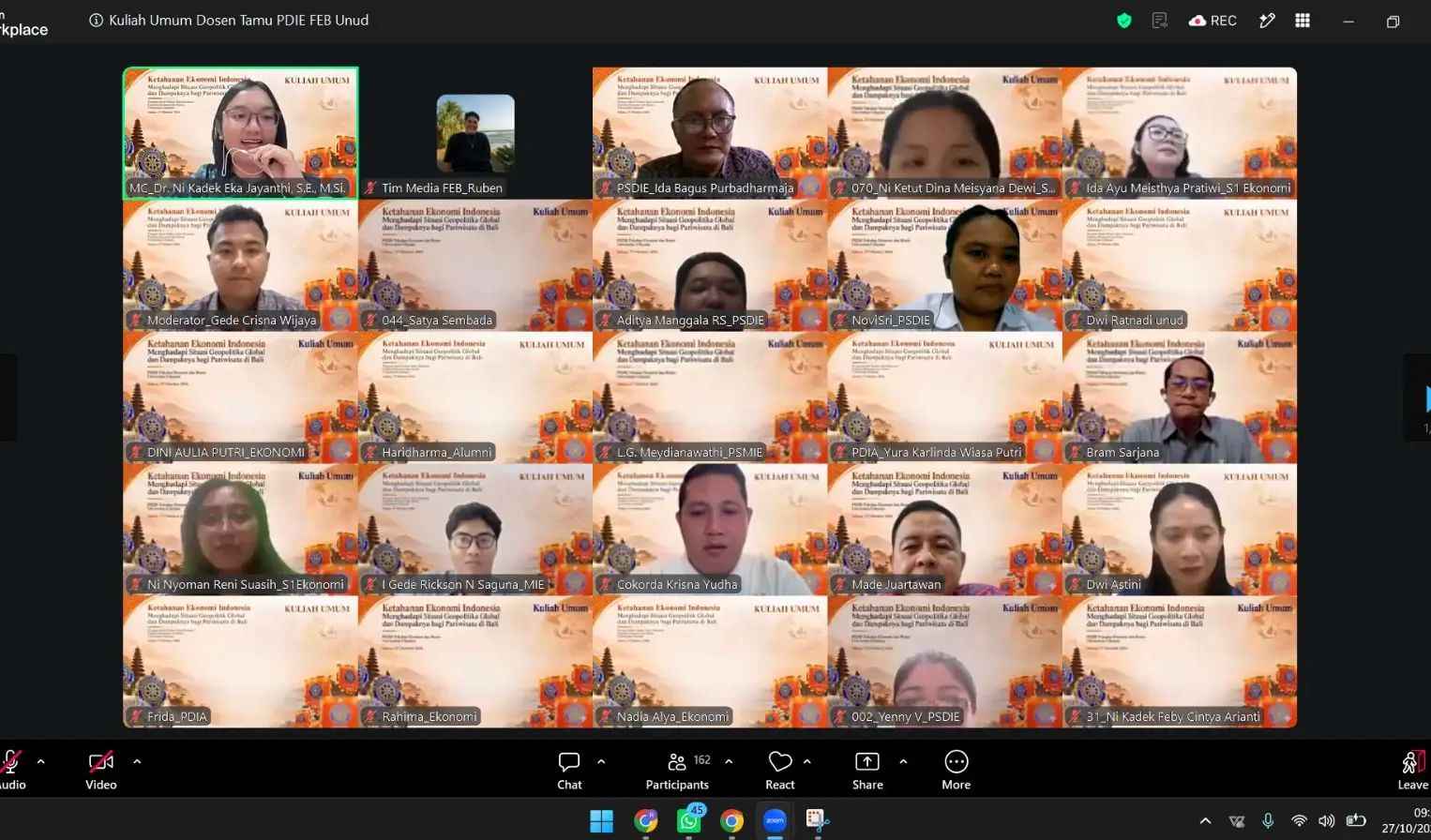
The Doctoral Program in Economics (PDIE) at the Faculty of Economics and Business (FEB), Udayana University (Unud), successfully hosted a Guest Lecturer Public Lecture themed "Indonesia's Economic Resilience Facing Global Geopolitical Situations and Its Impact on Tourism in Bali" on Tuesday, October 27, 2026, from 09:00 to 14:00 WITA online via Zoom Meeting. The event was attended by approximately 170 participants, including lecturers, students from various study programs at FEB Unud, and representatives of local government agencies.
This public lecture served as an academic enrichment forum and policy dialogue connecting economic diplomacy perspectives with regional development. The activity aimed to broaden the academic community's understanding of the impact of global dynamics on the national and Balinese economies, while simultaneously encouraging research opportunities and academic collaboration.
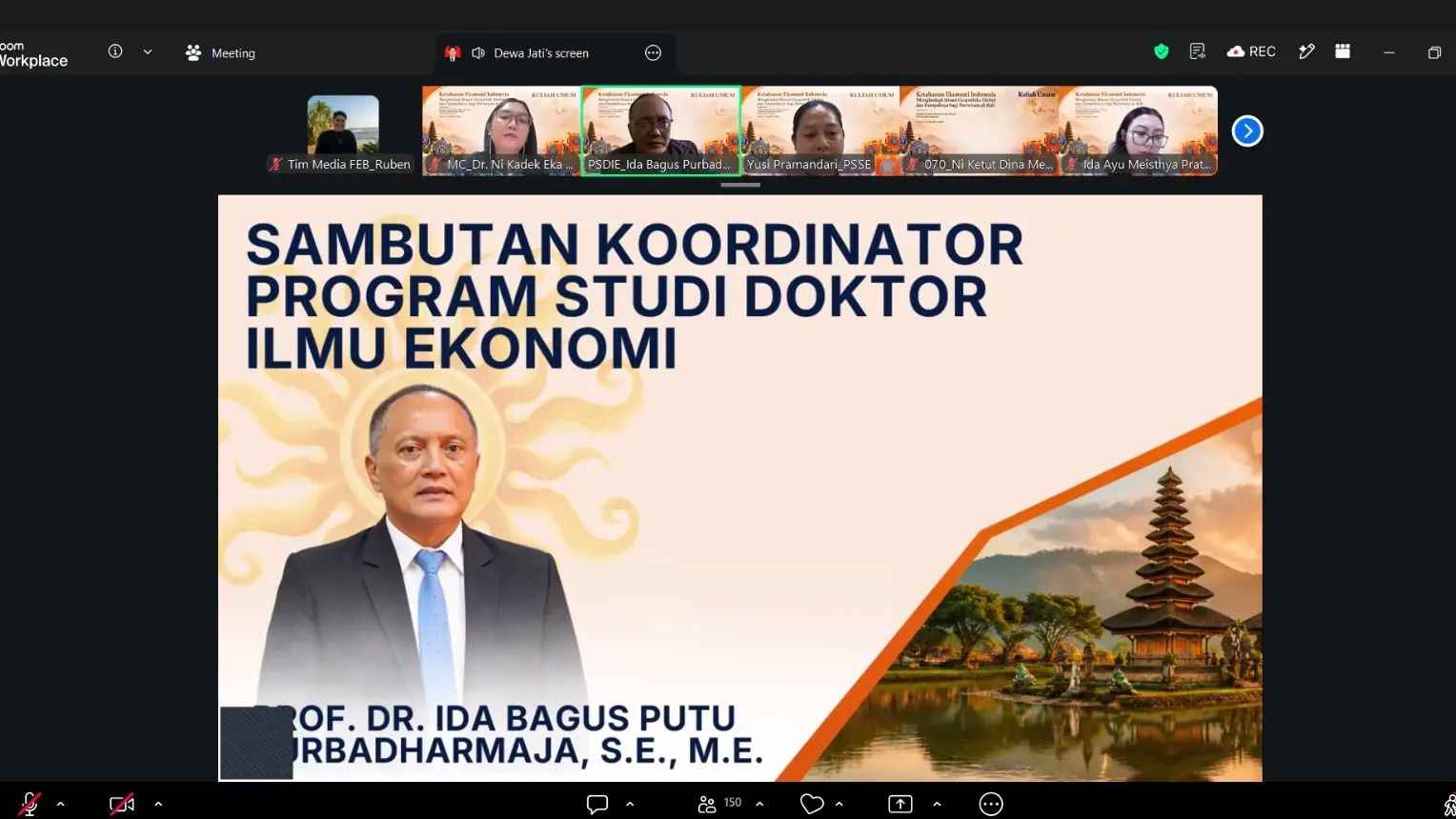
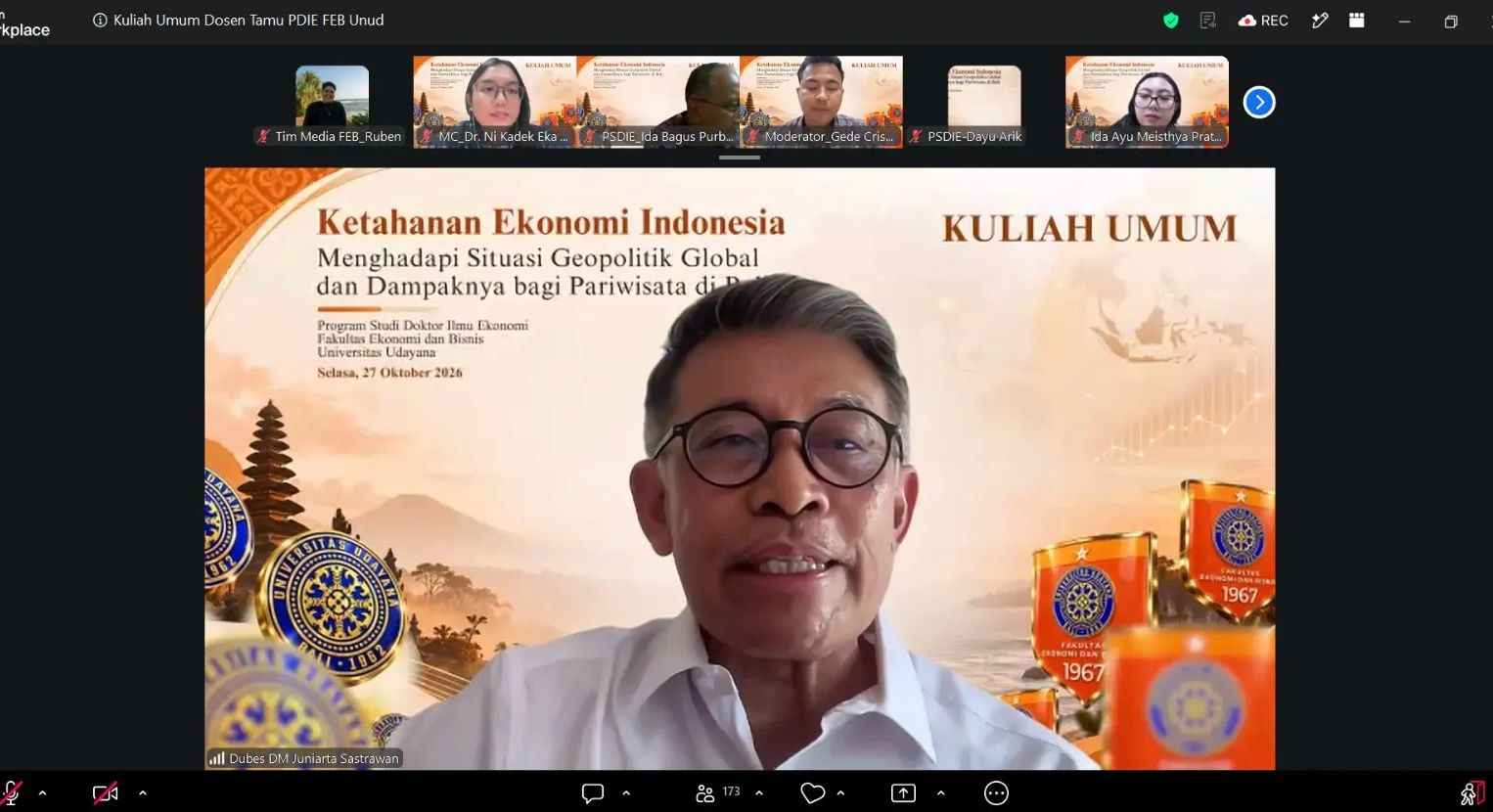
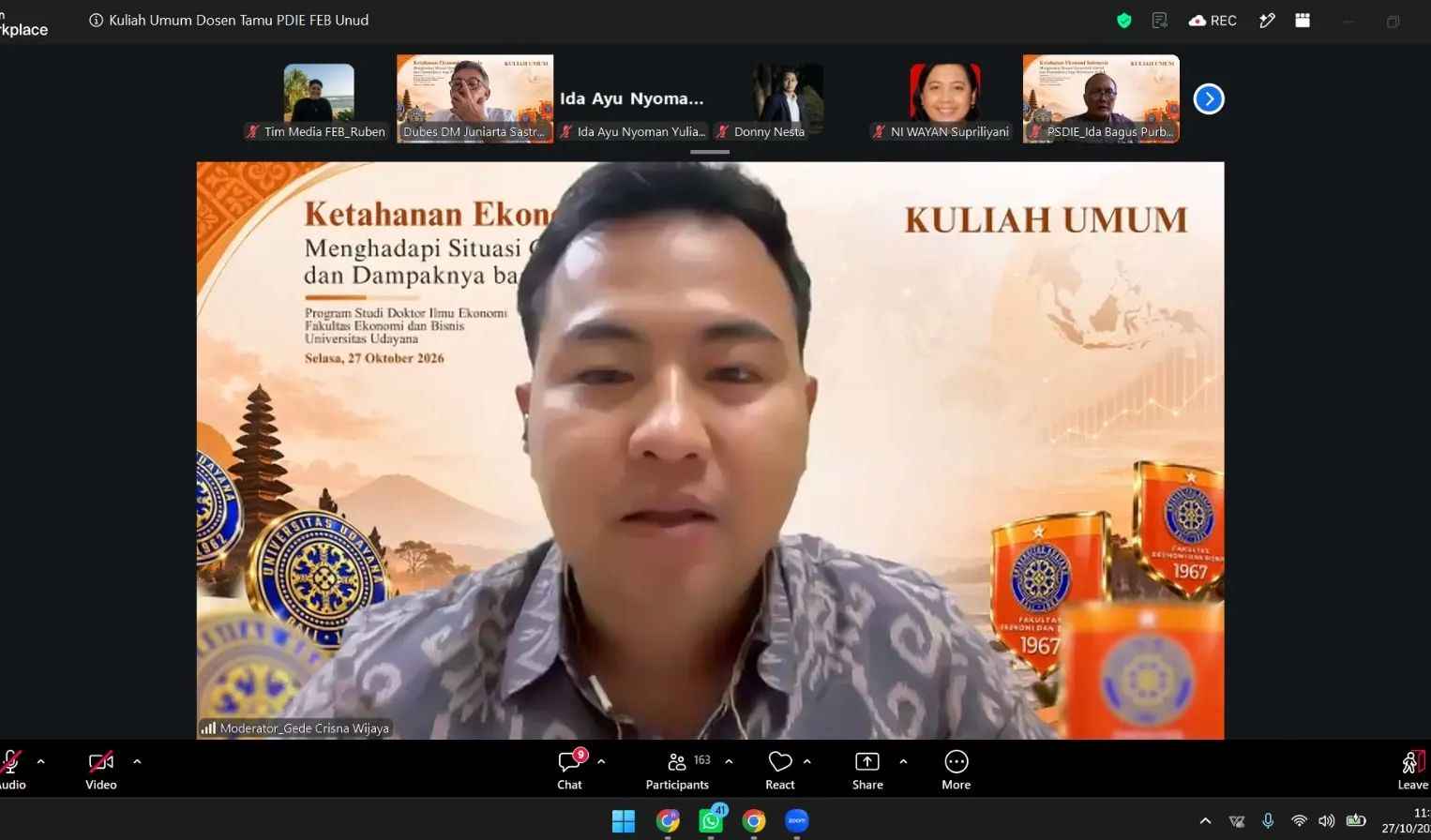
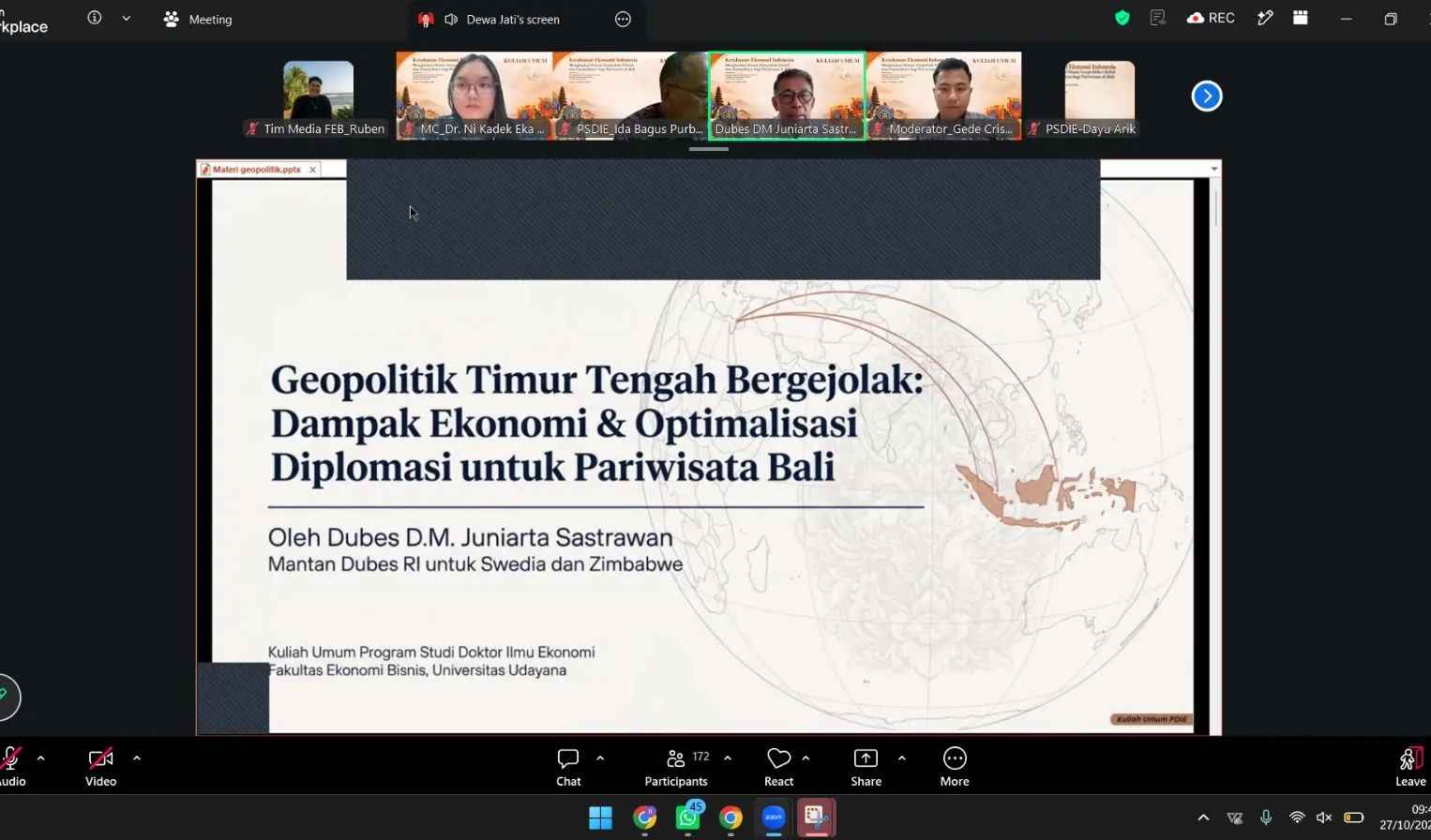
The event began with an opening ceremony, a joint prayer, remarks from the Coordinator of PDIE FEB Unud, Ida Bagus Putu Purbadharmaja, and a photo session. The public lecture featured H.E. Dewa Made Juniarta Sastrawan, S.E., M.A., M.Phil., an alumnus of FEB Unud and former Ambassador of the Republic of Indonesia to Sweden, Latvia, Zimbabwe, and Zambia, with Gede Crisna Wijaya, S.E., M.Si., a lecturer at FEB Unud, serving as moderator.
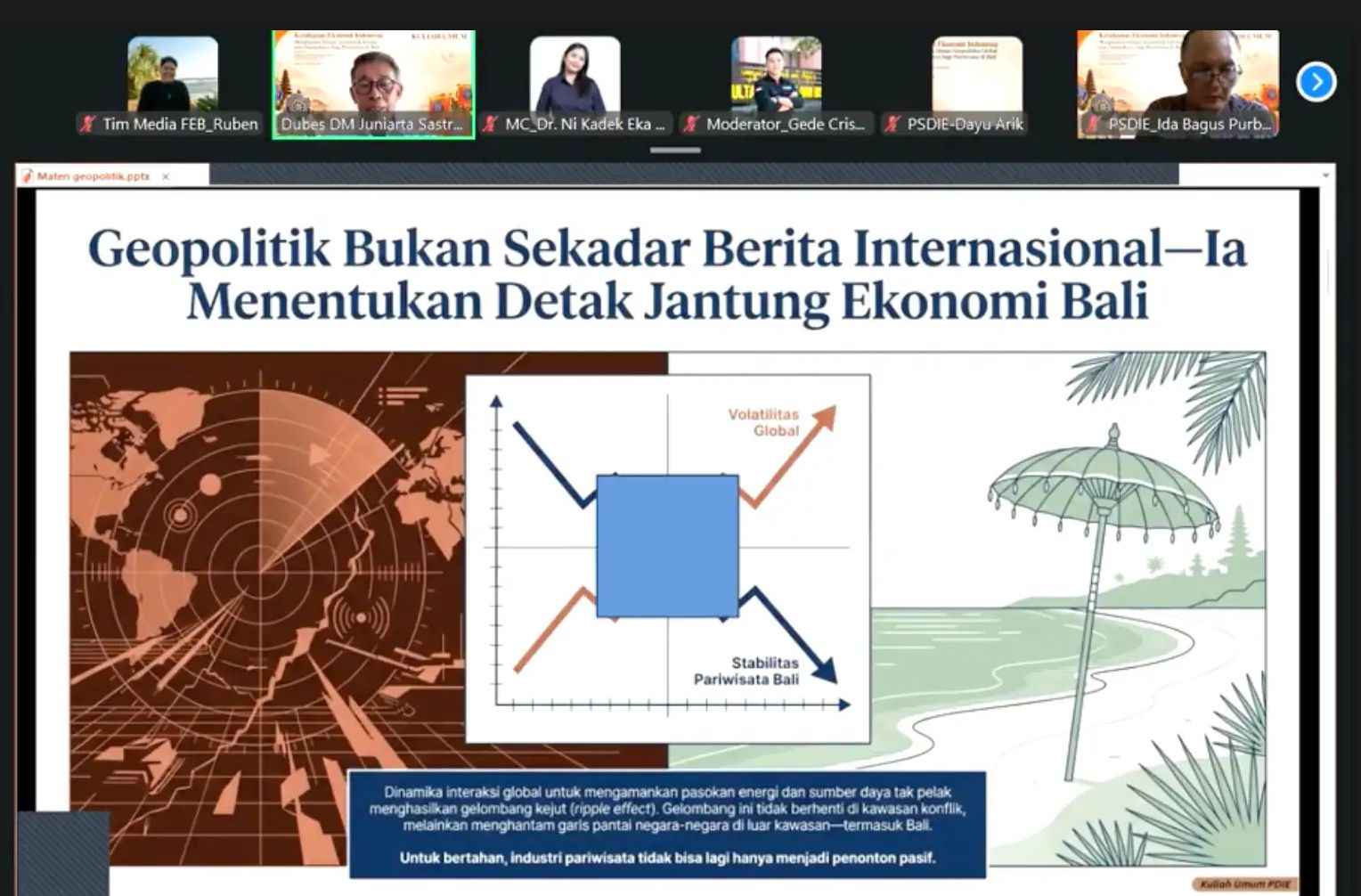
In his presentation, the speaker explained that geopolitical volatility affects the economy through international trade, energy prices, exchange rates, investment, transportation, and human mobility. Tensions in the Middle East, including potential disruptions in the Strait of Hormuz, have pushed Brent crude oil prices past USD 90 per barrel, well above the state budget (APBN) assumption of around USD 70 per barrel. This condition has the potential to increase the energy subsidy burden while placing pressure on domestic prices and the rupiah exchange rate.
Despite external pressures, Indonesia's economy is considered resilient, recording a growth of around 5.29% in the first semester of 2026, supported by household consumption and government stimulus. In Bali, tourism's reliance on transit flights through Dubai, Abu Dhabi, and Doha poses a primary risk. As a result, I Gusti Ngurah Rai Airport experienced a reduction of approximately 800 tourist arrivals per day during the affected period, while total arrivals from January to August were recorded at around 1% lower than the previous year.
The speaker presented eight strategies to strengthen Bali's economic and tourism resilience: diversifying tourist markets, strengthening flight connectivity through Air Service Agreements, promoting tourism villages and gastronomy through UN Tourism, developing MICE (Meetings, Incentives, Conventions, and Exhibitions) tourism, preserving Subak and the Batur Geopark, developing sustainable agriculture such as Kintamani coffee and cocoa, village-based waste management, and assessing the feasibility of an international financial center in Bali.
The discussion session was dynamic, featuring direct questions and comments via the Zoom chat box. Participants—ranging from professors, lecturers, and alumni to representatives of the Regional Research and Innovation Agency (BRIDA) of Badung Regency—discussed economic vulnerability to global conflicts, economic diplomacy, traffic congestion in Bali, the green economy, as well as supply chain and energy disruptions.
The speaker explained that transportation and logistics are the earliest sectors affected by geopolitical instability, requiring economic diplomacy to involve cross-ministerial and institutional coordination. Meanwhile, the development of a green economy in Bali is deemed realistic if implemented gradually through green farming and green plantations based on the Subak system.
The discussion generated several ideas for further research, including transport economics and tourist mobility, tourism village governance, sustainable agriculture, village-based waste management, and the impact of an international financial center on Bali's economy. The event concluded with a symbolic presentation of certificates of appreciation to the speaker and moderator by the Coordinator of PDIE FEB Unud.
Through this public lecture, PDIE FEB Unud reinforced its role as a space for academic and policy dialogue to expand the horizons of the academic community and drive the strengthening of a resilient, competitive, and sustainable Balinese economy.
Gallery

UDAYANA UNIVERSITY